
There is a perfect storm brewing when it comes to beef prices and we hope to help you prepare for it as best as possible.
First, let me start by apologizing for how long it has taken me to get back to doing blog posts. These last two years have been nothing short of beyond challenging and “unfair.” I use that word knowing I sound more like a spoiled, petulant teenager than a grown man who has seen combat and has enough gall to take on a system hell bent on keeping good livestock farmers in a state of perpetual struggle. But alas, I have begun to get over my physical and mental wounds of these few years.
Back to the topic at hand: beef prices! The collective number of beef cattle in the US is often called the US Beef herd. Two years ago censuses showed the US beef herd was at its lowest point since 1962.https://agecon.ca.uky.edu/us-beef-cow-herd-lowest-level-1962 Many factors led to that point: Slipping demand due to anti-Red meat rhetoric in the diet world, anti-beef rhetoric on the environmental front, rising Healthcare costs and an aging rancher population, “climate change,” and a slew of other reasons.
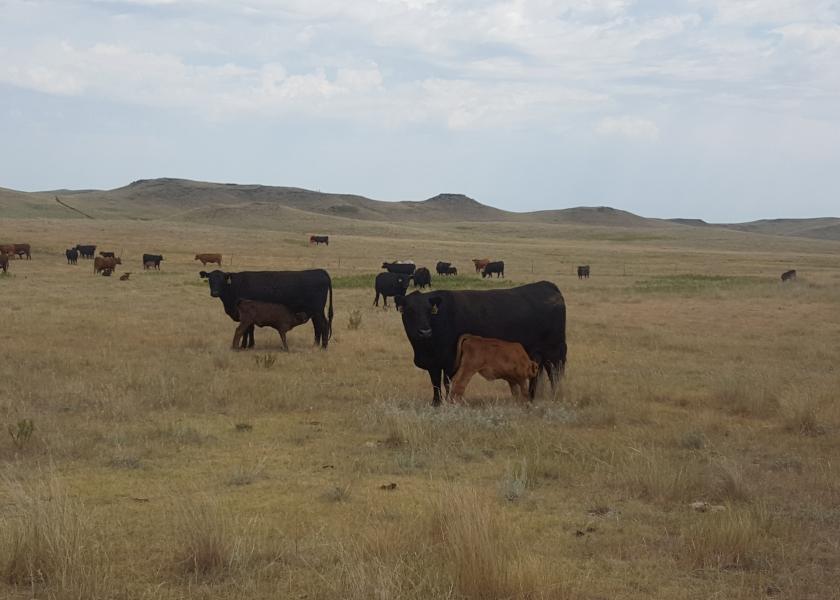
Despite the feed lots always being front and center in the animal welfare and environmental debates, the vast majority of the US cow herd is grass fed. Most are cow calf producers on huge tracts of land with contracts to produce a certain number of 500 to 600 pound calves to be sold to a feed lot for finishing. In order to be profitable, these cow calf producers must utilize their forage as efficiently as possible to keep costs down. I am not saying they are all 100% Grass-fed but a vast majority are. Why does that matter? Huge tracts of land, whether ranchers are able to densely rotate cattle or not, often lack necessary shelter for a thousand cows or more. Climate change is often said to be the cause of horrendous weather fluctuations. Take this article for example: https://www.foodsafetynews.com/2013/10/freak-storm-hits-south-dakotas-cattle-industry/ Over 75,000 cattle died in a freak South Dakota snow storm in October in 2013. A single storm. In one state. I promise you ranchers up there select cows that know how to deal with harsh winters. Multiple feet falling in a couple hours is not something anyone can simply combat or prepare for. Cows were stranded, unable to walk though the deep snow and starving with all their food buried. Ranchers and state officials did what they could bringing hay to the survivors via helicopters.
Climate change also caused historic and deadly flooding in Iowa and Nebraska. https://www.npr.org/2019/03/21/705408364/nebraska-faces-over-1-3-billion-in-flood-losses Grass needs water but it also needs to breathe and see sunlight. Fences washed out, barns ripped down, forage ruined for at least a month and that includes most hay in the area that was in the form of round bales stored on the ground. People were forced to sell cows and some even sold the farm. Many cows were also killed in those floods.
Climate change also continues to cause multi-state prolonged drought In 2021 and 2022. https://texasfarmbureau.org/drought-forces-record-number-of-cattle-sold-in-texas/ Lines to drop off cattle at auctions in Texas sometimes lasted for 24 hours with people desperately trying to reduce how many cows were eating nearly non existent grass on their farms. I would have done the exact same. Being a grass farmer, it always pays dividends to reduce your herd in drought before you run out of grass and prices are still high. Drought during the growing season has a double negative effect: not only is there not enough grass for cows at that time but there isn’t enough grass to make hay for cows for later: https://www.ksat.com/news/local/2023/09/04/hay-prices-rising-supply-limited-amid-drought-and-extreme-weather/ When in a drought, if your grass isnt growing and you dont want to destock, you feed hay. It t
We will do another blog post about the actual cause of these weather events and not just arbitrarily call it “climate change.”
So often in the past, as beef prices rise, the USDA cuts deals with other beef producing countries so that we can import more beef to help the US consumer not have to pay too much for groceries. I have searched for recent activity like this but can’t find any. Please send any links my way if you come across an article. My point is while the USDA is somewhat of a facilitator for many agricultural programs, the USDA is primarily an organization to provide safe and affordable food for the US consumer. Notice how I didn’t say nutritious.
Insert the armchair environmentalists whose greatest achievements are switching to LED bulbs and not using their heated blankets as often. This same group of people, most of whom have never set foot on a farm, claim cow farts are destroying the environment. Horses fart long and loud. We don’t even eat them in this country yet no one has a problem with the over 37 million acres of pleasure horse ground. Cows burp. And yes, it stinks. To me, it “stinks” like money. That is a healthy gut fermenting a wide variety of healthy forage and maintaining the carbon pump that is green grasses, weeds and legumes. Yes, when cows are fed diets rich in grains, they produce more methane and often in the lack of any nearby forage, it doesn’t get added to the small, local methane cycle. Raised properly, cows can be part of a methane sink.
Now let’s add in mega food tech dollars in the form of the impossible burger and beyond burger. For the last ten years or so you heard a lot of if you don’t know exactly what to eat to be healthy, at least eat food that is minimally processed or not processed at all. That goes out the window when you switch from a pure beef burger seasoned with spices and herbs, to a Frankenstein food made with patents and annual cash crops often soaked in chemicals due to their unnatural monoculture production as well as over a dozen “food-like” substances. There is big tech money in the ability to “not need land” to produce beef. They absolutely need land to produce the soy and peas and other annual cash crops these are based on. But imagine having a pure and nutrient dense product while not having enough money to advertise in a counter assault on the food tech industry. This is why we farmers rely on word of mouth marketing and repeat customers so intensely. Remember, I am not trying to feed the world like big ag. That is a lie anyway. I am trying to feed my community.
Still with me??? Thanks! Now back to the shrinking beef herd. That article was two years ago. It has shrunk for the last two years even more and projected to shrink again next year. Cattle are normally an 8 year cycle. Meaning, as people decide to butcher a female now that could have other wise been allowed to breed and make calves, it takes about 8 years to make up for the loss of that female. In the big picture, generally, prices get high and higher and higher then lower and lower and lowest. Peak to peak or valley to valley is about 8 years. This cycle is going to be much longer. Beef prices in recent history (prior) to CoVID were kept low by insanely cheap pork and chicken prices. Labor and fuel costs have shrunk margins in those industries. Smithfield announced the closure of 35 hog farms. That alone may not force bacon so high but it could be the canary in the coal mine. If alternate meat prices climb back up, beef demand could sky rocket.
How about our furry family members? As the cat and dog population of the US grows, we need to produce more feed. And while much of it is a by product of the meat packer industry, more and more people feed their animals better quality foods. Many pets eat better than their owners. I am talking about switching from chicken by product meal to ground chicken; beef by product to beef organ and meat grindings.
There are many many factors affecting beef prices. We will continue to have worsening droughts and flooding. Ranchers will continue to have things set up for them to struggle. And yet, people will still scapegoat cows for “climate change.”
Buy in bulk. Learn to cook and eat lower quality cuts. Budget for buying in bulk instead of pretending like there isn’t enough money for better meat direct from a farmer. You have enough money for Doritos and every newest Iphone and amusements parks and movies and restaurants. What if I told you could get a $9/lb high end ribeye? The kind you would pay 25 or 30 bucks per pound for at a whole foods or Fresh Market? Welcome to buying in bulk from a farmer. And most of us sell for cheaper than that. It seems like it is insanely expensive to spend $1800 on beef all at once but you get really good cuts of meat, support your local farmer, and generally get better nutrition and have it cut the way you want it… all for the price of high end ground beef in the grocery. Don’t have enough space? Find a family that wants to split a half or whole cow.
You can pay the farmer or pay the doctor. An ounce of prevention is worth a pound of cure and a whole host of other appropriate euphemisms.
Buckle up y’all. Prices are not going to get better any time soon.
 Semper Grazing Ranch Gone Wild