
Good afternoon, good evening or good night. Wherever you are reading this, may your water cycle be slow and steady. May needed rain fall and 500 year floods become a thing of the past. If we are honest with ourselves, we know the previous statement won’t happen in our lifetimes or even our childrens’. Hopefully, if we act now and act holistically, cooperatively, it will happen for our grandkids and all their descendants.
Things are really improving on our farm. Fruit trees continue to get bigger casting more shade and protecting more and more soil moisture. The pasture sward thickens. We have more and more amphibians. Birds are a constant. We have less and less runoff water from our farm. Our 26 acres plus our 45 rental acres 30 minutes away are doing very well. And by that, I mean improving life governing natural cycles. I mean more opportunites to see wildlife in the heart of death chemical rural America. But our tiny little piece of land is a drop in the bucket compared to the massive acreages surrounding us. Yes, pesticides and herbicides may play a role in keep cheap food cheap, but the moment we patented life and ironically began pouring so much poison on our food is the moment we lost the autonomy of our physical bodies to pursue life. Ok fine. In general, most of the chemical sprayed only directly effect that farmer and maybe a few neighbors way and that is only if there is zero run off.
What if I told you it isn’t that simple? What if I told you before we even look at what tools we are subsidizing to keep cheap food cheap and sick people sick, We need to focus efforts on keeping our soil covered and ideally maintaining a modicum of diversity on the land. In our area, that often means protecting and encouraging trees; at least on our property lines. Too many farmers, my neighbor included cannot get the Earl Butz mantra out of their head. Unfamiliar with Earl Butz? Read this: https://grist.org/article/the-butz-stops-here/ He changed so much of our food economy and as I would vehemently argue, our weather. “Plant plant fence row to fence row. Get big or get out.”

Despite knowing this mantra would lead to a massive surplus in cheap grain, he still encouraged farmers to tear down trees and bushes, on the periphery or whole acreage, and grow as much grain as they could. Was this good for farmers? Almost entirely not. The old policy was the US would pay farmers not to plant if we were near a surplus of whatever grain crop. The land would “rest” for a year, two or three and be put back into production. We matched production to consumption and demand abroad. After Earl Butz, The calories produced per American skyrocketed. Look at this chart of types of calories consumed between the 70s and 2000s: https://thesocietypages.org/graphicsociology/2011/04/11/nutrition-circles/
So not only were we somewhat programed by everyday western culture to gain weight as our caloric intake increased and jobs became more and more sedentary, we began loosing diversity left and right. More and more pockets of wildlife on the edges of a farm field were snuffed out; burned, bulldozed, pillaged. As if that is not enough, more of our waterways became poisoned, calories produced were less nutritious and our weather has gotten steadily worse with the declining soil organic matter and the hastening of our water cycle.
We bemoan rising food prices and nod our heads when politicans talk about lower grocery prices. As a society, we have no idea what actually would be best all around. Many of us on the regenerative side of farming know what it will take but we get laughed out of conventional farming conventions. Are we really better off with chemicals? I guess people must have been starving and miserable during the “sleeping, terrorizing twenties.” Oh that’s right, the 1920s were roaring! In fact, there was a surplus of food during the 1920s which caused hardship for the farmers due to the low prices. Who is actually better off with so much ag tech and chemical in our food production model? Not the farmers. Not rural America. Not the consumer. Not our wildlife. Not our water ways. Not our economy. Welcome to holism. We need policies that help 95% of Americans and American businesses; not the influential 5%.
We want to actually save money? The government needs to lower health insurance. Maybe the government should do something to lower car insurance. Property insurance? We are being trained to be penny wise and dollar stupid by corporate interests.
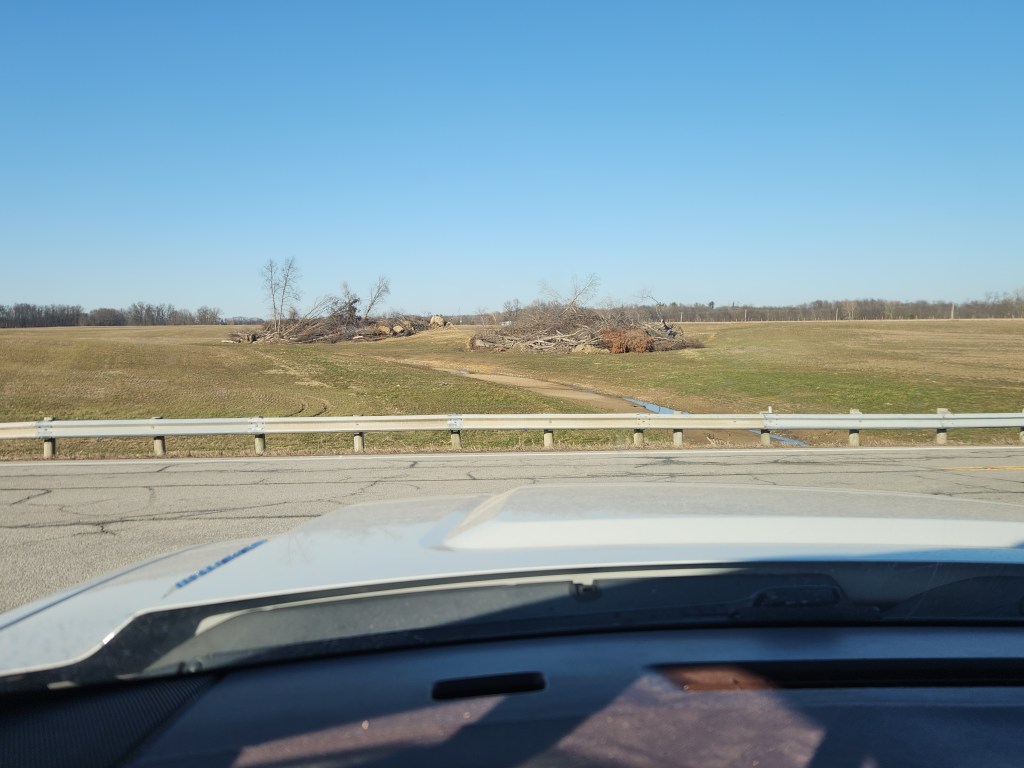
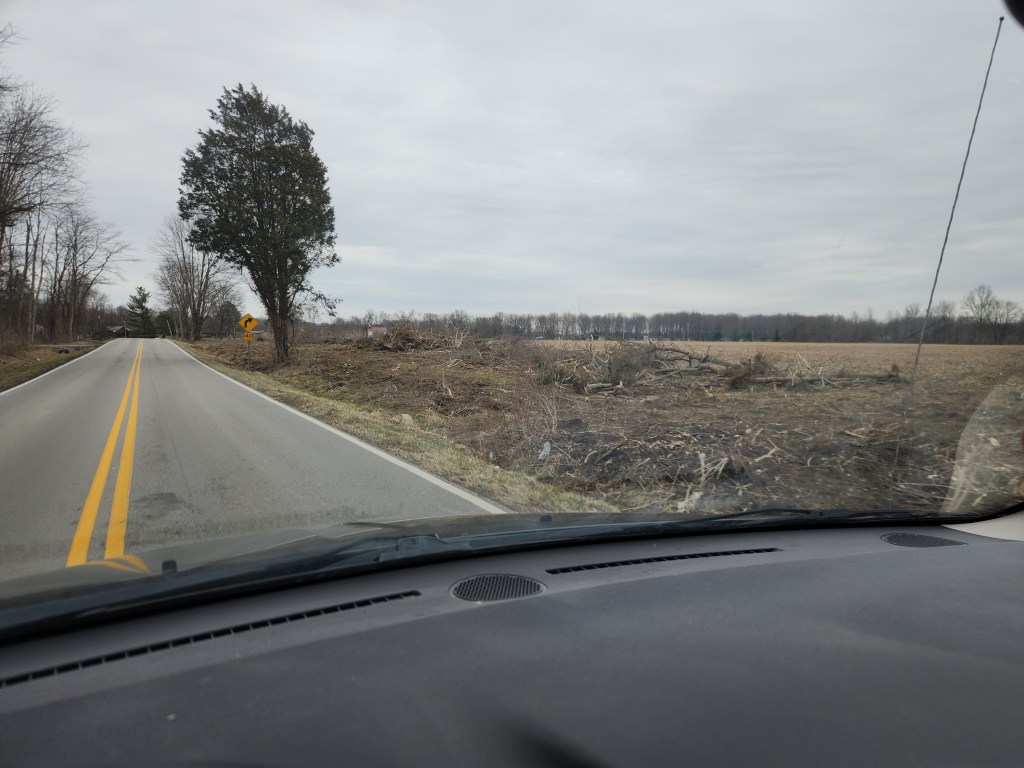
Driving around southern Ohio these days breaks my heart. On almost any street near a corn field you see entire tree lines or small acreages of forests ripped down and just bulldozed into a pile in a final statement of indifference. In recent, presettlement history, southern Ohio was mostly woodlands with a few spots like the Scioto River Valley that were more open due to the bison that called these pockets home. These were small groups of woodlands bison. They are nothing like the massive herds of plains bison who built the soils in the plains despite such arid conditions there.
Arid environments without animal impact trend toward desert while humid environments, much like what southern Ohio ought to be, trend towards woodlands. Trees in humid evnironments slow the water cycle down but also keep it going. They protect against runoff as well as so much immediate evaporation. They keep the soil cooler. It is mid March as I write this. Yesterday got to 80 degrees. The wind was blowing and there was a tremendous amount of dust on gravel driveways at Turner Farm… in March. Not August. I am very concerned for what Spring will bring. Our soils are already firming up far earlier that would be ideal. I know that statement is antithetical to most ranchers celebrating less temporary damage to their pastures and to an early greenup. But as Americans we often lack the ability to see beyond what is right in front of us. We all know people who will rejoice at a mild Winter but complain about a terrible Summer for mosquitoes and flies. You can’t always have goodness without suffering a little. Much like you can’t rape and pillage the soil in the name of short term, cheap food and low quality nutrition without some serious consequences.
High moisture weather fronts moving over a largely barren and dry, hot ground is a sure recipe for Tornados. Those same weather systems moving over areas that can still evapotranspirate (pump water into the air) often do not develop tornados and the ones that still do, they are reduced in intensity. How many of us just watched the new Twisters? They figured out how to stop tornados by increasing the amount of available moisture a tornado can pull in to choke itself out. Much of that is psuedo science or just plain altogether false but, it cannot be argued that protecting soil moisture can lead to a calming or mitigation of weather; especially if we do it on a national scale. Pipe dream? absolutely. No less worthy of our effort though.
We need a management system or governance that look at the whole picture and sees the connectedness of everything. Food production should be penalized if it detracts from wildlife. Farmers should be required to plant 50 to 100 saplings for every mature tree they cut down and ideally, on that farmers land. We do this for corporate businesses paving over a wetland; why not farms? You may be saying to yourself “that is so extreme.” Do you know what is extreme? The amount of chicken we raise in this country; the amount of pigs and chickens squeezed into barns. The number of small holder farmers forced off the land and now destitute; the rural drug epidemic. The vast concentration of wealth in the cities. We need millions more grassfed ruminants on the land. We need them to be well managed. “But we need all the corn for ethanol and high fructose corn syrup.” While I admit the carbon cycle aspect of ethanol is an improvement over straight gasoline, these two products were created to use over produced corn and create cheap addicting food.
But how are we going to produce cheap food? We can make food more affordable by 1) stopping subsidies for poor production methods 2) stop exporting our food to other countries and 3) stop putting it in non food products and then running around acting like we are short on food. Unfortunately, this country is one giant factory and we are all worker bees. I am well aware if we stop exporting so much food and then stop putting food items in inedible things, we will have a surplus. a huge one. The farmers producing in a way that heals the land should then and only then be paid a subsidy.
The bible says the left hand should not know what the right hand is doing. America took that verse waaaay out of context. It means we should not brag about the good we do. Our best deeds are filthy rags. We must look to humbly serve God and show the love of Christ to others. All that being said, in govnerment, the left hand should absolutely know what the right hand is doing; and the feet, knees, scalp, blood, kidneys etc. You get the point. We subsidize farmers where some actually pollute water ways and the Army Corps of Engineers or Fish and Wildlife etc uses more taxpayer dollars to clean up the very thing the government financially encouraged. WWWWHHHHHAAATTTTT????!!!!! Hey DOGE, pull your head out of your dark place and look at this! Secretary Rollings! You want to make a difference and modernize agriculture? Please hear our pleas. You may find Thomas Massie to be antagonistic to corporate interests, but he understands how to reshape our government and food production systems. How many low income families can’t buy (or the few who wont buy) healthy, quality food and become more of a financial drain on the system? We then spend a crap load of tax dollars for their increased health care costs. And it is not the fault of 99.9% of them. Our country is soooo wildly backwards I have no tears left.
In closing, full circle, I pray everyone knows their plan for shelter in the event of a tornado. Calm the earth and subdue it, we have not.
 Semper Grazing Ranch Gone Wild